

The Digital Asset Market Clarity Act (Clarity Act) has officially failed to advance in the U.S. Senate after its key procedural cloture vote fell short of the required 60-vote threshold this afternoon.
The high-stakes roll call, which kicked off just after 2:15 p.m. EDT, saw more than 40 senators vote against the motion to proceed, effectively filibustering the landmark cryptocurrency market-structure bill (H.R. 3633). Bipartisan negotiations collapsed at the final hour after Senate Republicans rejected a last-minute counterproposal from Democrats regarding strict ethics loopholes and traditional banking protections.
⚠️ Why the Vote Failed: The Final Sticking Points
Despite Senate Republicans releasing a heavily revised, 635-page substitute text earlier this week that included 126 substantive changes requested by Democrats, two primary issues tanked the consensus:
- The Trump Ethics Gaps: While the final text mandated that the president, lawmakers, and their spouses place digital asset holdings into a blind trust, Democratic leadership heavily criticized two major loopholes. The rules entirely excluded officials' children and featured a hard sunset clause for January 2029. Senator Elizabeth Warren forcefully attacked these provisions on the Senate floor, labeling them a "weak fig leaf" that failed to prevent President Trump from profiting off his personal crypto ventures.
- Stablecoin "Deposit Flight" Fears: Community banks heavily lobbied moderate Democrats to block the bill over its stablecoin rewards framework. Traditional financial institutions warned that allowing interest-like reward programs on stablecoins would trigger catastrophic deposit flight out of local banks, despite a proposed Treasury "circuit breaker" provision designed to halt rapid capital migration.
📉 Immediate Market Impact
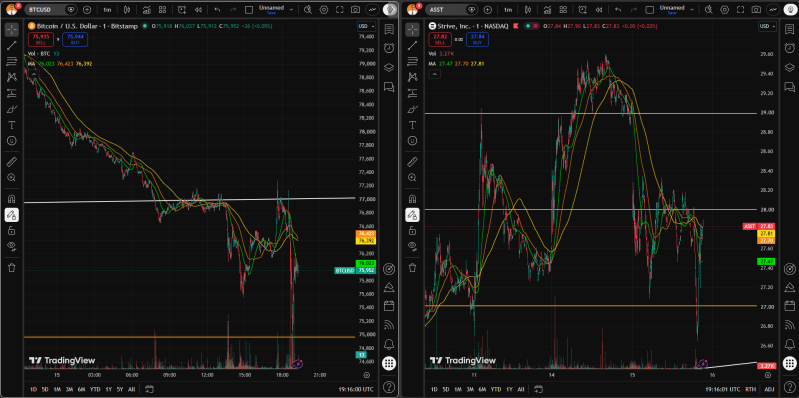
- Crypto Slumps: Following the definitive "no" on the Senate floor, Bitcoin (BTC) immediately gave up its support levels, sliding further to trade near $75,850.
- Treasury Liquidation: Corporate crypto treasuries suffered the worst intraday liquidations. Strive Inc. (NASDAQ: ASST), which was already down on macro tech headwinds, accelerated its plunge to trade down over 8.5% at $26.54 as institutional desks rapidly unwound their legislative premium.
- Prediction Markets Vindicated: Decentralized forecasting platforms accurately anticipated the gridlock. Leading into the vote, Polymarket bettors had aggressively slashed the implied probability of the bill passing into law this year down to just 14%.
🔮 What Happens Next?
With only 14 legislative working days remaining before Congress breaks for its October midterm election recess, analysts at CoinDesk state that this failure effectively ends all major crypto market-structure legislative work in Washington for 2026.
The regulatory burden now shifts back to independent agencies. Both the SEC and the CFTC have explicitly warned the industry that they will continue aggressively moving forward with their own standalone rulemakings—such as the SEC’s proposed "Regulation Crypto Assets"—even without a statutory mandate from Congress.
Comment below if you would like to review how this legislative death impacts the SEC's current timelines for pending Solana or Ethereum ETF applications, or should we look at the technical support levels for Bitcoin as it handles this sudden policy shock?
All responses may include mistakes. For financial advice, consult a professional. Learn more
Add comment
Comments