

The NFIB Small Business Optimism Index jumped 2.4 points in July to 99.8, beating economic forecasts of 97.5 and hitting its highest level since August 2025. The data, released this morning by the National Federation of Independent Business (NFIB), shows that small business sentiment has moved above its 52-year historical average of 98.0.
The index saw broad-based strength, with eight of its ten core components moving higher.
💼 Labor Market Resurgence & Shortages
A massive surge in hiring intentions was the primary driver behind the index's growth. However, findings from the NFIB July Report signal that finding workers remains a major operational headwind:
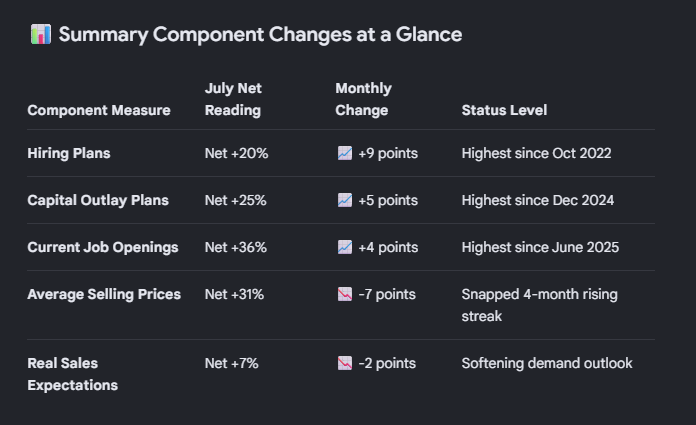
- Hiring Plans: A net 20% of business owners plan to create new jobs over the next three months, a 9-point jump from June and the highest level recorded since October 2022.
- Unfilled Openings: 36% of owners reported job openings they could not fill, climbing 4 points to a 14-month high.
- Top Single Problem: For 27% of respondents, "labor quality or availability" was named as their single most important business problem. Business owners noted that qualified applicants in labor fields are "nonexistent," a squeeze exacerbated by recent government crackdowns on illegal immigration.
📉 Cooling Inflation Pressures
On a positive note, for macroeconomics, the survey indicated a clear slowdown in small business pricing power and inflation concerns:
- Pricing Action: The net percentage of owners raising average selling prices dropped 7 points to 31%, snapping four straight months of price increases.
- Forward Pricing: A net 28% plan to increase prices over the next quarter, down 4 points.
- Inflation Concerns: Only 14% of owners cited inflation as their top business problem—a 7-point drop from June, and the first decline recorded this year.
⚠️ Rising Geopolitical & Economic Uncertainty
Despite the optimistic headline number, a significant undercurrent of friction remains:
- Uncertainty Index: The NFIB Uncertainty Index rose 2 points to 91, sitting well above its historical average of 68.
- The Drivers: According to NFIB Chief Economist Bill Dunkelberg, this elevated anxiety is driven by owners second-guessing whether it is a good time to expand, heavily influenced by the ongoing global war and diplomatic standoff with Iran.
- Sales Cooling: Expectations for future real sales volumes fell 2 points to a net positive 7%.
If you'd like, let me know if you want to explore how these numbers contrast with last week's official government nonfarm payroll data, or if you need a deeper look at the wage growth trends reported by Main Street firms.
All responses may include mistakes. For financial advice, consult a professional. Learn more
Add comment
Comments