

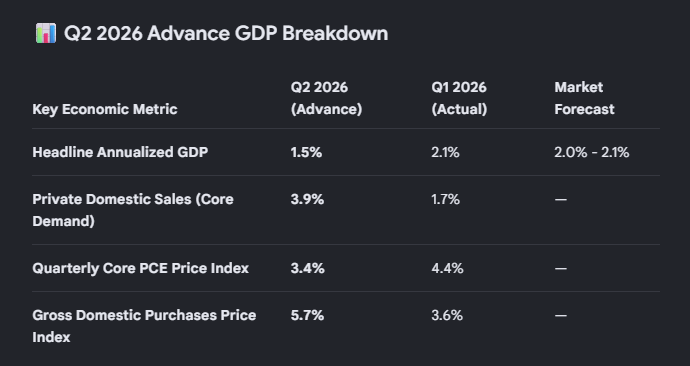
The U.S. real Gross Domestic Product (GDP) increased at an annualized rate of 1.5% in the second quarter of 2026, according to the advance estimate released today by the U.S. Bureau of Economic Analysis (BEA).
The reading marked an unexpected deceleration from the 2.1% growth recorded in the first quarter, falling well short of Wall Street consensus expectations of 2.0% to 2.1%. Geopolitical tensions and supply disruptions tied to the war in the Middle East significantly weighed on the headline figure.
🔍 Underlying Drivers & Economic Drags
While the headline growth rate cooled, the underlying data reveals a sharp divide between highly resilient domestic demand and trade distortions:
- Strong Consumer Engine: Household spending rebounded dramatically, serving as the main driver of growth for the quarter.
- Robust Private Demand: Real final sales to private domestic purchasers (excluding government spending and net exports) accelerated sharply to 3.9%, up from 1.7% in Q1.
- The Trade Deficit Drag: A major surge in imports—partially triggered by shifting tariff policies—and a worsening trade deficit severely dragged down the topline number.
- Slowing Government Spending: A sudden pullback in public sector and government expenditures acted as an additional headwind.
📈 Q2 Price and Inflation Measures
The GDP report also included key updates on quarterly price indices, showing persistent energy pressures but moderating core inflation:
- Gross Domestic Purchases Price Index: Surged to 5.7% in Q2, up from 3.6% in Q1, heavily impacted by rising energy costs.
- Quarterly PCE Price Index: Rose to 5.1% compared to 4.6% in the previous quarter.
- Quarterly Core PCE Price Index: Softened significantly to 3.4%, down from 4.4% in Q1.
If you want to evaluate how this changes the macroeconomic landscape, I can provide a breakdown of how Wall Street analysts view these numbers or outline the dates for the upcoming second and third GDP revisions.
All responses may include mistakes. For financial advice, consult a professional. Learn more
Add comment
Comments